Hialeah's geology is tricky. We sit on porous Miami Limestone with pockets of loose sand and organic silt from the Everglades' eastern edge. A standard split-spoon just doesn't give you the full picture here. The high water table, often just a few feet down at 25.8268°N, complicates things further. That's why we rely heavily on CPT cone penetration testing. It gives us a continuous digital log of tip resistance and sleeve friction, pinpointing exactly where the soft layers begin and end. For engineers working near the Miami Canal or out west toward the Turnpike, this data is non-negotiable. We often pair the CPT with in-situ permeability testing to understand how fast water moves through those silty seams before dewatering even starts.
A single CPT sounding replaces a dozen disturbed SPT samples, giving Hialeah engineers a high-resolution map of the subsurface without the guesswork.
Scope of work in Hialeah
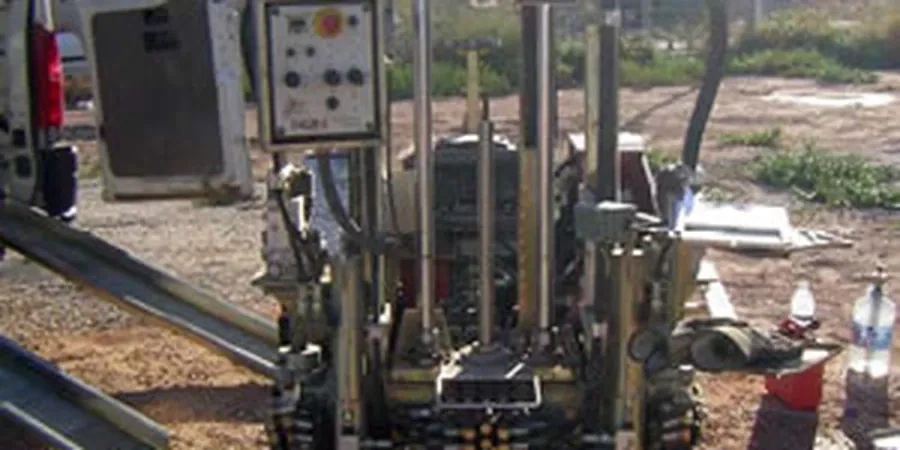
Typical technical challenges in Hialeah
Our CPT unit's hydraulic rams apply 20 tons of downforce, yet Hialeah's geology can still test their limits. The primary challenge arises from dense chert lenses within the limestone. When chert fragments scratch the porous sleeve filter element, pore pressure transducer data becomes unreliable. We protect the cone tip on brownfield sites by saturating the filter element with glycerin and pre-drilling a pilot hole through pavement. Another issue is rod buckling above ground during deep soundings, which we prevent using a rod guide system attached to the truck frame. It's a mistake to skip cone maintenance just because the soil appears soft. A worn cone tip can overstate tip resistance, making a soft peat layer seem denser and leading to an overly optimistic foundation design that might later fail.
Our services
Our geotechnical lab in Hialeah offers a direct link from field testing to foundation analysis. We provide comprehensive CPT packages specifically designed for South Florida's unique stratigraphy.
Standard CPTu Sounding
A cone penetration test with pore pressure measurement provides qt, fs, and u2 logs, plus soil behavior type classification using Robertson charts. This is essential for foundation design in Hialeah.
Seismic CPT (SCPT)
Adding a geophone module allows us to measure shear wave velocity (Vs) downhole. This directly determines site class per ASCE 7, eliminating the need for separate geophysical testing.
CPT Dissipation Testing
We stop the cone at targeted depths to observe pore pressure decay. From this, we estimate in-situ hydraulic conductivity and consolidation characteristics of the Everglades silts.
Common questions
How much does a CPT test cost in Hialeah?
Standard CPTu soundings in Hialeah typically cost between US$160 and US$230 per test, depending on depth and mobilization distance. A full-day SCPT campaign with dissipation tests is priced per project scope.
Can CPT replace SPT borings for a high-rise in Hialeah?
Not quite. While CPT provides continuous data excellent for settlement analysis, the Florida Building Code still accepts SPT N-values for liquefaction triggering. We suggest a hybrid program: use CPT for profiling and SPT at key intervals for correlation.
How do you handle refusal on the Miami Limestone?
When tip resistance exceeds 50 MPa and sleeve friction spikes, we stop pushing to protect the cone. For shallow refusal, we pre-core through the caprock with a rotary drill, then resume CPT in the softer material below.
What is the turnaround time for a CPT report?
We provide raw digital logs the same day the truck leaves the site. The final interpreted report, including corrected parameters and soil behavior type charts, is delivered within 48 hours. More info.