Within Hialeah, Florida, seismic engineering constitutes a specialized domain of geotechnical and structural design dedicated to safeguarding buildings and infrastructure against earthquake-caused ground movement. Although South Florida is not typically linked with high seismicity akin to California or Alaska, the area's distinct geological characteristics and inventory of older structures render seismic considerations vital for enduring resilience. This field encompasses a spectrum ranging from site-specific hazard evaluations to sophisticated mitigation strategies, guaranteeing that structures can endure uncommon seismic occurrences as well as the more frequent secondary phenomena like ground settlement or vibration intensification. For Hialeah's expanding population and growing commercial sectors, incorporating seismic design transcends mere regulatory compliance, representing a proactive commitment to public safety and asset protection.
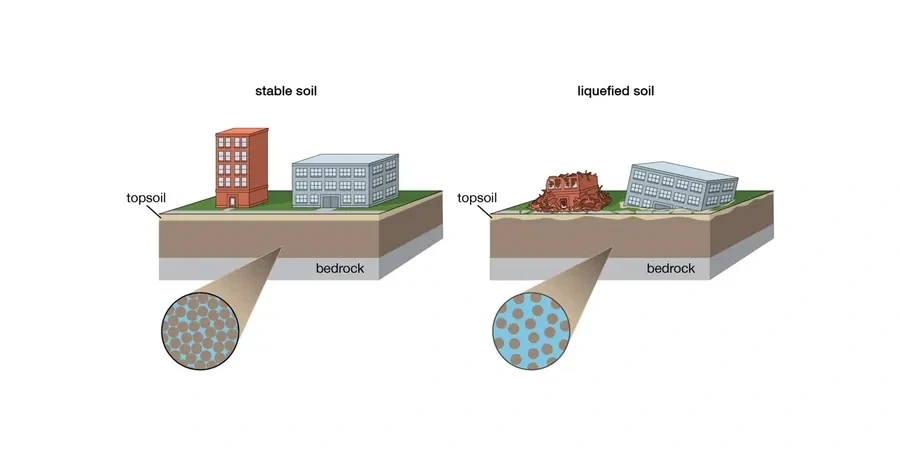
Hialeah sits atop the Floridan aquifer system, underlain by porous limestone and sandy soils that are susceptible to a phenomenon known as soil liquefaction analysis during dynamic loading. Although the city is located in a low-to-moderate seismic hazard zone per the United States Geological Survey (USGS) National Seismic Hazard Maps, the risk is amplified by the potential for induced seismicity and the area's vulnerability to sinkholes and karst-related ground instability. The shallow water table, often just a few feet below the surface, exacerbates these concerns by saturating granular soils, which can lose strength and behave like a liquid when shaken. Understanding these local conditions is critical for engineers tasked with designing foundations that remain stable under both static and dynamic loads.
In Hialeah, every seismic design must adhere to the Florida Building Code (FBC), which integrates the American Society of Civil Engineers (ASCE) 7 standard for minimum design loads. The present edition references ASCE 7-16, establishing seismic design categories using ground motion parameters and site class. For the majority of commercial and high-occupancy buildings, a site-specific geotechnical investigation is compulsory to ascertain the seismic site class and to assess hazards like lateral spreading or diminished bearing capacity. Moreover, Miami-Dade County amendments might stipulate more rigorous requirements for essential facilities such as hospitals, emergency response centers, and schools. These provisions guarantee that new builds and significant upgrades satisfy performance criteria from life safety to immediate occupancy following a design-level earthquake.
The types of projects that require seismic engineering in Hialeah span from new mid-rise residential towers and industrial warehouses to critical infrastructure upgrades. For example, a tilt-up concrete distribution center near the Miami Canal might need a base isolation seismic design to decouple the structure from ground motion, while a retrofit of a historic masonry building in the Leah Arts District could demand nonlinear dynamic analysis to preserve its architectural integrity. Even seemingly routine projects like bridge replacements, water treatment plants, and elevated storage tanks fall under this category when they are located in areas with soft soils or high groundwater. The common thread is the need for a tailored approach that balances cost-effectiveness with robust performance, accounting for Hialeah's specific subsurface challenges.
Common questions
Is seismic design really necessary in Hialeah given Florida's low earthquake risk?
Indeed, due to Hialeah's karst geology and elevated water table, distinctive weaknesses such as sinkhole-induced shaking and soil liquefaction arise, which can harm buildings even from slight trembles or faraway seismic events. The Florida Building Code requires seismic regulations founded on USGS hazard maps; disregarding these can result in structural collapse, legal exposure, and increased insurance premiums.
What is the difference between a seismic site class and a seismic design category?
Site class, denoted A through F, characterizes the soil profile's rigidity and thickness, established via geotechnical testing; conversely, the seismic design category (SDC), ranging from A to E, merges site class with ground motion intensity to prescribe analysis techniques and detailing specifications. In Hialeah, the prevalence of soft limestone and sandy soils frequently leads to Site Class D or E, potentially raising the SDC and necessitating more stringent design approaches.
How do local soil conditions in Hialeah affect earthquake ground motion?
Typical of Hialeah, loose sands and permeable limestone can intensify ground shaking by 1.5 to 2.5 times relative to rock sites, notably at periods pertinent to low-rise and mid-rise structures. Under saturated conditions, these soils may additionally experience liquefaction, leading to abrupt settlement, tilting, or lateral spreading that compromises foundations and subterranean utilities.
What types of projects typically trigger a seismic analysis requirement under the Florida Building Code?
Buildings categorized under Occupancy Category III or IV—including schools, hospitals, police stations, and large assembly venues—nearly always demand a seismic analysis. Furthermore, any structure taller than three stories or possessing irregular geometry, along with bridges, retaining walls exceeding 10 feet in height, and towers, must adhere to ASCE 7 seismic requirements according to the site's particular SDC.