Hialeah sits on a limestone ridge with an average elevation barely above 10 feet, but what really shapes foundation decisions here is the mix of shallow rock and pockets of compressible organic soils left over from the eastern Everglades margins. When a warehouse slab near the Gratigny Parkway shows differential settlement within the first year, the culprit is almost always inadequate ground improvement — not the structural concrete. Stone column design addresses that exact problem by replacing soft, saturated ground with dense aggregate columns that drain, densify, and reinforce the soil mass simultaneously. We use site-specific SPT data and grain-size curves to size the columns, and we often cross-check the profile with an in-situ permeability test before finalizing the grid spacing.
Stone columns don't just stiffen the ground — they create a composite mass that drains excess pore pressure during seismic shaking, a detail that matters in a region with shallow groundwater.
Scope of work in Hialeah
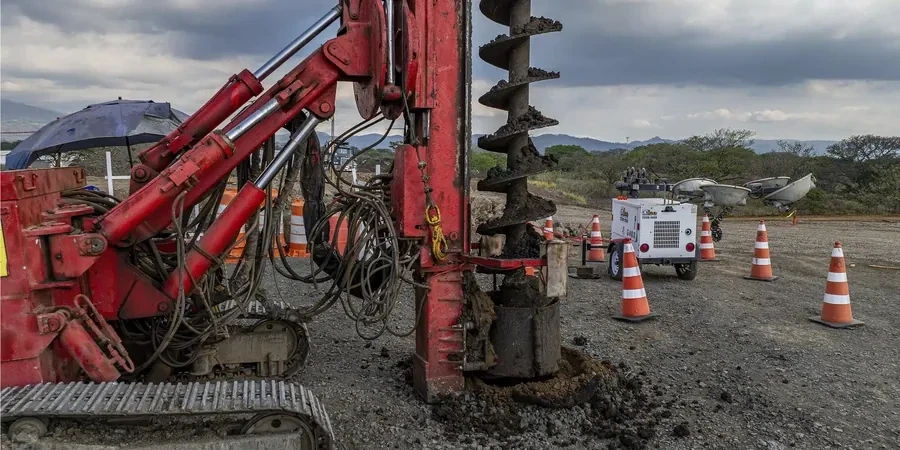
Typical technical challenges in Hialeah
Hialeah's explosive growth since the 1960s turned marshland into dense residential blocks, and many older commercial strips were built on compacted fill that didn't account for long-term organic decay. Today, that means remodelers and developers keep finding buried muck layers when they expand existing structures. A stone column design without a high-quality site investigation — including CPT soundings to map the soft zones continuously — can miss pockets where columns won't reach competent bearing, leading to costly post-construction settlement. The water table here sits barely 3 to 5 feet below grade, so construction access and temporary dewatering logistics have to be baked into the design from day one.
Our services
From feasibility analysis through installation oversight, our stone column services in Hialeah are always adapted to the area's unique soil conditions.
Feasibility and Settlement Analysis
Using Priebe's method and finite element modeling, we perform settlement estimates under your structural loads to ensure stone columns achieve the 1-inch total settlement limit typical for Hialeah commercial projects.
Column Grid Design and Spacing Optimization
The design specifies diameter, penetration depth to bedrock or bearing layer, and either triangular or square grid spacing to reach the desired improvement factor—commonly 1.5 to 3 for the region's organic silts.
Installation Specification and QA/QC
We provide contractors with complete specifications: aggregate grading per ASTM D448, lift thickness, compaction energy, and a post-installation load testing schedule to confirm modulus improvement.
Common questions
What does a stone column design package include for a Hialeah site?
This package covers a geotechnical data assessment, bearing capacity and settlement calculations, column layout with spacing and diameter, aggregate quality requirements, installation procedures and compaction standards, plus a field QA/QC plan—usually including modulus load tests on no less than 2% of the columns.
How much does stone column design cost for a project in Hialeah?
For an average Hialeah site, design costs range from US$1,660 to US$5,470, influenced by building size, column count, and the need for advanced numerical modeling due to irregular loads or nearby structures.
How long does the design process take?
After receiving the final geotechnical report, a standard stone column design for a single-story commercial building typically takes 10 to 15 working days. Sites with complex geology or strict settlement criteria may require an extra week for parametric analysis.
Can stone columns be installed in Hialeah's high water table?
Absolutely—stone columns are frequently installed below the water table via bottom-feed vibroflot techniques. The design must address possible aggregate loss at the column toe and include construction controls to avoid necking in saturated fine-grained soils.