The Miami Oolite formation under Hialeah runs shallow—often just 8 to 15 feet down—and its porosity complicates how shear waves reach a building’s base. Most lots in the 33012 area sit on Class D or borderline Class C profiles, so ground motion amplification is never a guess you can afford. We run site-specific response spectra and pair them with isolator prototypes that match the short-period acceleration mapped in ASCE 7-22 Chapter 22. Before selecting lead-rubber or friction-pendulum units, we cross-check the column loads with a footing analysis to verify that the isolation plane won’t introduce unintended rocking on the pinnacled bedrock. Because Hialeah’s water table sits barely four feet below grade during the wet season, buoyancy and scouring potential go straight into the bearing-capacity calculations.
A two-second period shift in the isolator eliminates about seventy percent of the base shear that a fixed-base structure would see on Hialeah’s Class D limestone.
Scope of work in Hialeah
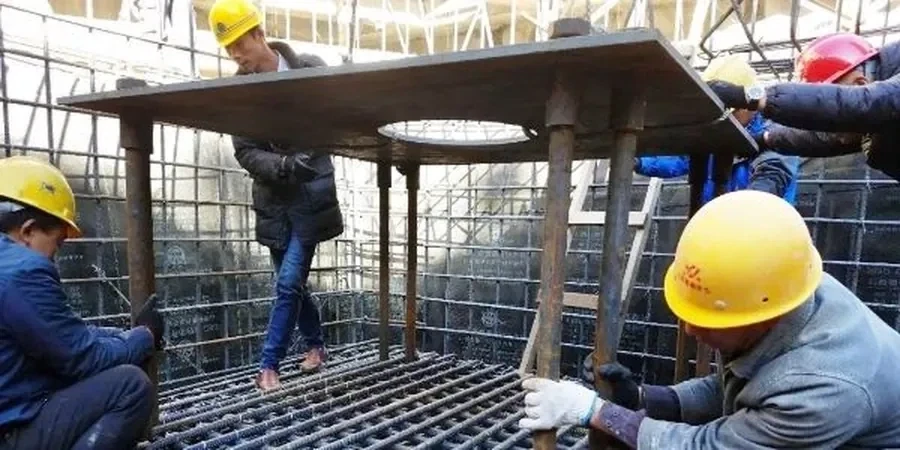
Typical technical challenges in Hialeah
Hialeah is situated less than six feet above mean sea level, and according to the 2020 Census, its population exceeds 220,000 within a dense arrangement of single-family homes and strip malls. If a repeat of the 1944 Florida earthquake—a magnitude 5.4 event felt as far south as Key West—were to occur, the unreinforced masonry buildings would be at significant risk unless base shear is reduced early. While isolation shifts demand from the brittle frequency range of CMU walls, the primary concern is storm-driven groundwater that can flood the isolator pits within hours. Our design incorporates moat drainage and dual sump systems to manage a 100-year rainfall event while keeping isolators dry, and we specify self-lubricating sliding surfaces to prevent corrosion from locking the bearing during critical displacement. Every design package includes an inspection schedule aligned with the Miami-Dade County permit renewal period.
Our services
Our Hialeah isolation design process begins directly with the geophysical survey and evolves into a full nonlinear time-history model, ensuring the deliverables remain straightforward for the local plan reviewer to approve without revisions.
Isolator Selection & Modeling
Lead-rubber, high-damping rubber, and friction-pendulum systems are selected based on column loads and target period shift, modeled in SAP2000 or ETABS using gap elements to account for moat impact.
Prototype Testing Program
Full-scale dynamic shear testing up to MCE displacement, aging at 70°C, low-temperature stiffening evaluations, and scragging recovery checks are performed in accordance with ISO 22762-1.
Peer Review & Permit Support
Response-spectrum reports, pushover analyses, and isolation-plane details are provided to satisfy the third-party review checklist required by Miami-Dade County.
Construction Inspection
Verification of moat drainage, isolator leveling surveys, bolt-torque records, and final clearance measurements are conducted before locking the superstructure.
Common questions
How much does a base isolation design package cost for a Hialeah project?
For a typical low-rise commercial or multi-family building in Hialeah, the complete package—including site-specific response spectrum, isolator selection, nonlinear time-history model, and permit-ready drawings—costs between US$3,820 and US$9,610. The price varies depending on the number of column lines, whether a separate MASW survey is needed, and the scope of isolator testing.
Does Hialeah’s limestone require a different isolator type than clay sites?
Yes. The pinnacled Miami Oolite can cause uneven stiffness beneath the foundation mat, so we prefer friction-pendulum systems or lead-rubber bearings with sufficient vertical stiffness to manage differential settlement. The mode shift is specifically tuned for the short-period amplification typical of Class D limestone.
How long does the design and testing phase take?
From the moment we receive geophysical survey data, the design phase typically takes three to four weeks. Prototype testing adds another five to six weeks due to aging and creep protocols, and we run both tracks concurrently when the schedule is tight.
Can you retrofit an existing building with base isolators?
It is feasible but more complex than new construction. We must temporarily shore the columns, cut the pedestals, and slide the isolators into place. This has been done on a couple of two-story CMU buildings in Hialeah where the owner wanted a seismic upgrade without demolition.
What maintenance do the isolators need after installation?
We recommend annual visual inspections of the moat clearance and drainage, along with a torque check on anchor bolts every three years. The elastomer is designed for a 50-year service life with no routine maintenance, but we include a ten-year inspection that removes one isolator for shear-stiffness verification.