The ground beneath Hialeah tells two very different stories. East of the Palmetto Expressway, near the old racetrack, you hit shallow oolitic limestone with solution cavities that drain faster than a bathtub with no plug. Westward, toward the Okeechobee Road corridor and the Hialeah Gardens boundary, the soil profile shifts to alternating layers of fine sand and organic silt, remnants of the Everglades marsh that once covered the area. A single borehole log gives you stratigraphy. But when you need the hydraulic conductivity of each layer to size a dewatering system or to prove that a stormwater exfiltration trench will actually work, you need numbers, not just descriptions. That is where in-situ permeability testing becomes essential. Our test pits crew has encountered voids at 8 feet that swallowed drilling fluid in seconds, and in other locations, clay lenses that held water for hours. The Lefranc and Lugeon methods provide the data engineers need to make those distinctions reliably.
A single Lugeon test in Miami oolite can reveal more about foundation drainage than twenty lab perm tests on disturbed samples.
Scope of work in Hialeah
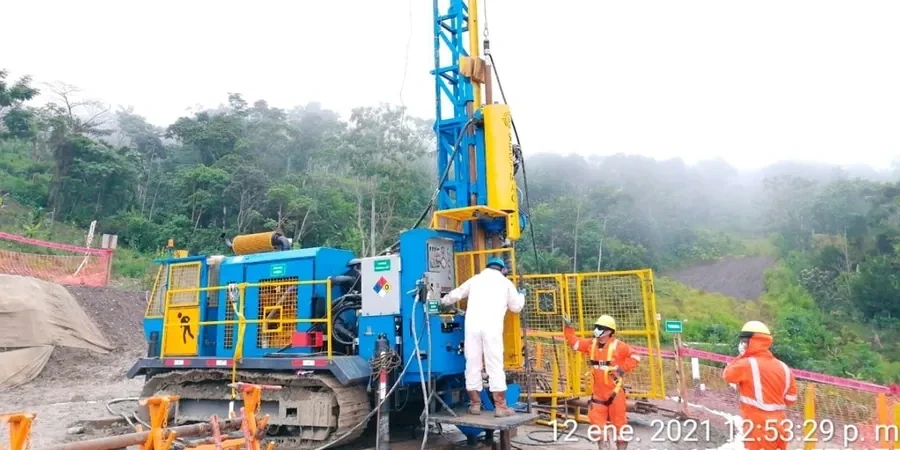
Typical technical challenges in Hialeah
Several contractors in Hialeah often consider the entire site as one permeability unit, merely averaging a couple of Lefranc values and concluding. This oversimplification backfires when the dewatering system extracts water from a layer with high conductivity at a depth of 15 feet, leaving the overlying silt saturated, which causes slope instability in the excavation. The Miami-Dade County Public Works Department now mandates site-specific hydraulic conductivity data for any permanent dewatering permit application, particularly within the cone of influence of the Biscayne Aquifer. Conducting tests at an incorrect depth or omitting the packer isolation step in fractured rock yields numbers that are not just inaccurate but also misleading. A Lugeon test where packer seating is improper can indicate an apparent conductivity five times higher than the actual rock mass value, because water bypasses the packer into the annulus. The engineering team requires verification of packer inflation pressure at every stage before data recording.
Our services
In Hialeah, field permeability methods are tailored to the unique difficulties presented by South Florida's geology. Each testing program harmonizes smoothly with the geotechnical investigation framework.
Lefranc Variable-Head Testing
For measuring borehole permeability in granular strata and fill soils, we employ electronic pressure transducers with automated data logging to record the full head-dissipation curve, thereby delivering k-values for every separate hydrostratigraphic layer.
Lugeon Pressure Testing in Rock
The Miami Limestone and oolite formations undergo five-stage packer tests. Flow is maintained in each stage until stabilization, and then results are analyzed using both Houlsby and Ewert criteria to differentiate between laminar flow, dilation, and washout behavior.
Dewatering Feasibility & Aquifer Characterization
We combine Lefranc profiles with pumping test analysis to evaluate the radius of influence and sustainable yield for construction dewatering systems, ensuring compliance with Miami-Dade environmental regulations for the Biscayne Aquifer.
Common questions
What is the difference between a Lefranc test and a Lugeon test?
The Lefranc test determines hydraulic conductivity in granular soils and soft rock by employing a falling or constant head inside a borehole cavity, generally lacking packers. In contrast, the Lugeon test is designed for fractured rock: it uses inflatable packers to isolate a borehole section and injects water at staged pressures to measure flow absorption by the rock mass. For Hialeah projects, we apply Lefranc for sand and silt layers and Lugeon for the Miami Limestone bedrock.
How much does a field permeability test cost in Hialeah?
Typically, a single interval of Lefranc or Lugeon test costs between US$560 and US$1,210, influenced by depth, site accessibility, and the necessity of packer systems for rock isolation. For a complete vertical profile encompassing multiple intervals in a single borehole, pricing is adjusted accordingly, and after analyzing the planned boring locations, we offer a comprehensive proposal.
How many test intervals do I need for a dewatering design?
A minimum of one test per distinct hydrostratigraphic layer found in the boring is required. In a typical Hialeah profile comprising fill, sand, silt, and limestone, this translates to four to six intervals per borehole. The Miami-Dade County environmental code mandates enough data to characterize vertical variability in hydraulic conductivity, not merely an overall average.
Why can't I just use lab permeability tests on Shelby tube samples?
Laboratory tests determine permeability on small, disturbed or remolded samples, failing to account for fractures, solution cavities, or thin sand seams that govern field behavior. In Hialeah's oolitic limestone, the lab result may be 50 to 100 times less than the actual in-situ conductivity from a Lugeon test, as the sample does not include the connected void network.