In Hialeah, any excavation deeper than 12 feet triggers IBC Section 3304 requirements for protective systems, but the real challenge starts earlier—with the groundwater. The Biscayne Aquifer sits barely 4 to 6 feet below surface across most of the city, and ignoring it during a deep excavation design phase leads straight to blowouts, base instability, and costly delays. Our team runs the analysis under ASCE 7-22 load combinations, factors in the layered Fort Thompson Formation limestone, and models dewatering drawdown before a single bucket hits the soil. For projects near the Miami Canal or within the Leah Arts District redevelopment zone, we also tie in excavation monitoring from day one—inclinometers and piezometers give real-time feedback on shoring deflection and pore pressure, which matters when adjacent structures sit on shallow footings from the 1960s.
In Hialeah, groundwater controls the excavation design. Dewatering is not an add-on—it is the starting point.
Scope of work in Hialeah
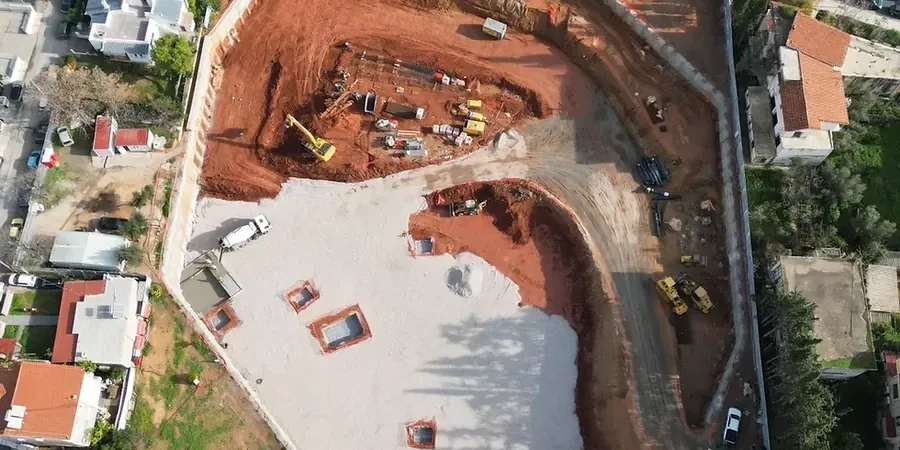
Typical technical challenges in Hialeah
Hialeah grew fast after the 1920s land boom, and a lot of what got built between then and the 1970s went up on shallow strip footings with no geotechnical report to speak of. When you open a 20-foot cut next door today, you are dealing with structures that have zero tolerance for angular distortion. We have seen cases where dewatering-induced settlement cracked a block building two lots away—the radius of influence extended further than the contractor expected because a buried paleo-channel connected the aquifer zones. Base heave is the other silent risk in deep excavations here. In the marl layers common north of 49th Street, the excavation bottom can swell within hours of unloading if the dewatering system misses a perched water lens. Our designs always include a pre-excavation pumping test and a heave check using the Terzaghi method with undrained strength parameters measured from Shelby tube samples—never just SPT blow counts alone.
Our services
Every deep excavation in Hialeah has a groundwater story. Our design packages address three interdependent pieces—structural shoring, dewatering, and movement control—so the contractor gets a coordinated set of drawings, not three siloed reports.
Shoring System Design
Soldier pile and lagging, secant pile, or soil nail walls sized for Hialeah limestone and marl profiles. Includes tieback spacing optimization and waler design per AISC 360.
Construction Dewatering Plans
Deep well and wellpoint system layouts with drawdown modeling. Pumping test specifications and discharge calculations for SFWMD compliance.
Geotechnical Instrumentation & Monitoring
Inclinometer arrays, settlement points, and vibrating wire piezometers with baseline readings and threshold alerts tied to the project's ground movement criteria.
Common questions
What depth triggers a shoring design requirement in Hialeah?
Per IBC 2021, any excavation deeper than 5 feet requires protective systems unless it is made entirely in stable rock. In Hialeah, the surficial sand and weathered limestone rarely qualify as stable rock in the regulatory sense, so we design shoring for practically every cut exceeding 5 feet. The OSHA 1926 Subpart P classification also applies: most Hialeah soils fall into Type C, which demands the most conservative sloping or shielding.
How do you handle the high groundwater during excavation?
The Biscayne Aquifer sits very shallow across Hialeah. We design active dewatering systems—typically deep wells spaced 20 to 40 feet apart—with pumps sized for the site's hydraulic conductivity, which we measure in situ via pumping tests. The goal is to pull the phreatic surface at least 3 feet below the excavation bottom before digging starts, and hold it there through the construction phase.
What does a deep excavation design cost in Hialeah?
Design fees for a deep excavation in Hialeah typically range from US$1,990 for a straightforward single-family lot retaining wall to US$9,200 for a complex commercial excavation with tiebacks, dewatering modeling, and instrumentation specifications. The number depends on excavation depth, proximity to adjacent structures, and the level of groundwater analysis required.
Can you design an excavation support system for a site next to a canal?
Yes. Canal-adjacent excavations introduce two complicating factors: a constant-head hydraulic boundary and potential seepage under the shoring wall. We model flow nets for the specific canal stage and run stability checks that include seepage forces. Often the solution involves a deeper cutoff wall or a row of relief wells between the excavation and the canal to manage pore pressure at the toe.